
This post may contain affiliate links, meaning I make a commission if you purchase through my links, at no extra cost to you. Disclosure here.
Everyone says, “Just be consistent.” But here’s the thing: consistency is not just about motivation or willpower.
I used to be so overwhelmed, trying to post three times a week at times, constantly falling behind, and still just not growing.
For a long time, I felt really stuck with my main YouTube channel until I started doing some tiny tweaks to my strategy. That made it so much easier to stay consistent over the past few years, and my YouTube channel finally grew. And I’m sharing them all in this article.
Keep reading below or watch the video:

8 lessons from growing a YouTube channel to 70,000+ subscribers
1. The one video rule
For a long time, I posted three times a week. Yet I wasn’t sure why I wasn’t growing, though I was putting a lot of effort and time into my videos.
The truth is, I was just posting randomly whatever I felt like. And a lot of the videos weren’t necessarily high quality. But I just felt like I had to fill in those three slots per week.
So I was creating a lot, but I wasn’t seeing results. Then I swapped to the one video rule: one video per week, consistently, for a few years. And that’s what actually started growing my channel. I was able to really focus on that one video per week and make it higher quality, tackling a topic that really resonated with my audience. I also had more time to research the topic behind each video.
These things combined, I think, just made my channel really blow up.
2. Improve the videos
For years, I was making the same type of content and not growing, but I was still expecting different results. And that’s when I realised that just sitting down and talking for 30 minutes to the camera and taking a screenshot of that for a thumbnail isn’t really what works on YouTube these days. At least not in my space.
So I started focusing on really improving my videos. That meant improving the titles, improving the thumbnails – which makes such a huge difference – and improving the intro of my videos, which is also a really big one. There are ways to craft a better intro that make your audience feel like, “Okay, this is the video for me,” and actually want to watch through the whole thing because they feel they will get so much value from it.
There’s also storytelling, and so many other things that can be improved about a video. I think all of these things combined are what also helped my YouTube grow.
And when you start working on the craft of making better videos, it also motivates you. You start to see results, and that keeps you going for the long run. And with YouTube, if you want results, you really do need to stay consistent.
3. The motivation game
I learned that motivation is very much overrated. So I stopped waiting to feel motivated or ready to film a video. And I realised that some days I just don’t feel like filming. Maybe I had a rough night’s sleep with my baby, or I have other things going on in my life, and I’m not particularly motivated.
But I realised I don’t have to feel motivated. I just have to start. If I begin going through the motions of setting up my camera and doing my makeup, I’m much more likely to just continue and do the thing.
And some days you won’t feel like filming either, and that’s okay. But it doesn’t have to stop you. You don’t need to wait for motivation to start.
What I’ve learned from neuroscience books is that dopamine, the “motivation” chemical, doesn’t really show up before you start. It usually kicks in after you begin. Often, 10 minutes into filming, you start getting into it, enjoying it, and wanting to tell your story more because that dopamine rises.
So I stopped waiting for motivation and just started doing it and getting things off my to-do list.
It also helped that for the longest time, my filming time was just my kids’ nap time, when they were babies or even now in the toddler phase. I might have only an hour to get my video done for the week. So I have to sit down and film right then and there, otherwise it wouldn’t happen.
That time constraint actually became a motivator. And I think being a parent can do that too. It forces you to be more intentional with how you use your time, whether it’s free time or work time, to film for YouTube.
4. The dip
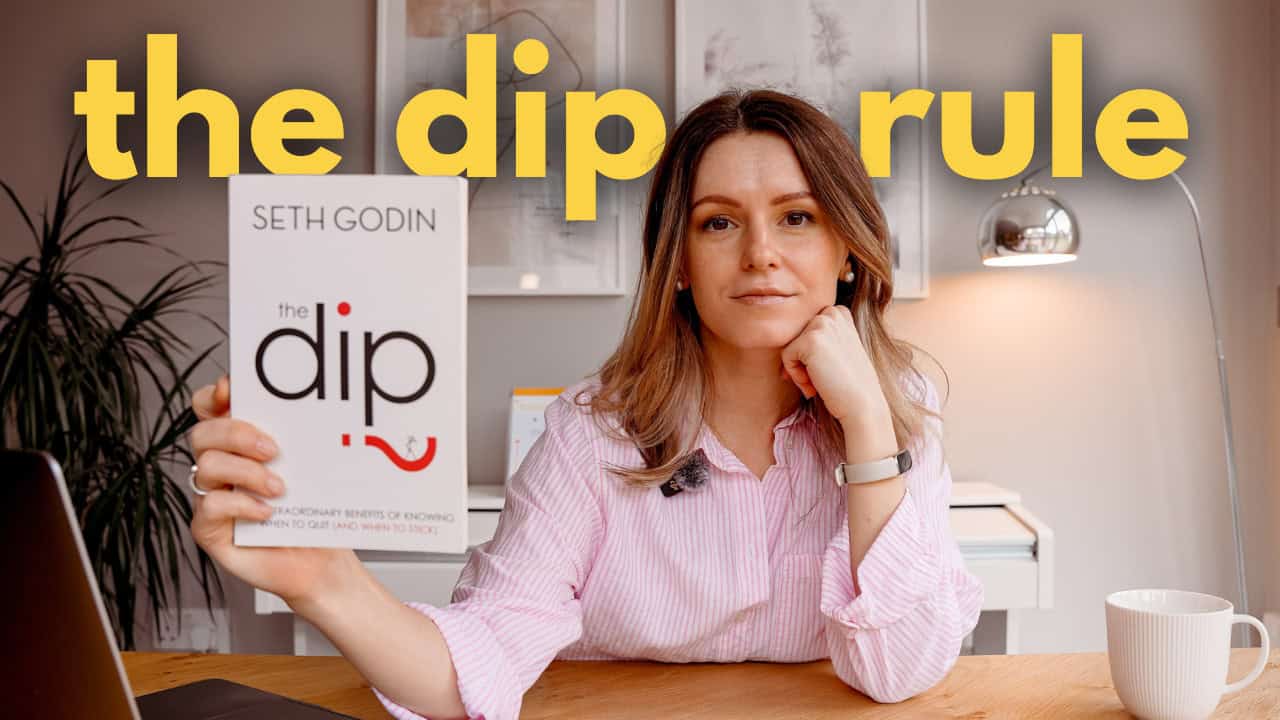
This is another concept I learned about in the business world, this time from Seth Godin’s book, called The Dip. And it’s all about knowing when you are in the dip.
The dip applies to any business, but more specifically, when we think about YouTube, every channel goes through a dip.
When you start a channel, you’re excited at the prospect of growing on YouTube and creating videos feels really energising. There’s a kind of honeymoon phase where motivation is high. But YouTube takes time. Real growth often comes after months or even years of consistency.
That’s where the dip happens. It’s a period where growth slows down or feels like it’s stagnating. For me, it was a long stretch of posting videos and not seeing much return – just a few views here and there, or very slow growth.
But everyone has to go through the dip to get to the other side, where things really spike up.
This is the stage where growth feels very slow, and quitting starts to feel like the logical choice because you’re not seeing results. But in Seth Godin’s book The Dip, he talks about how naming it helps. When you recognise you’re in the dip, a period that’s difficult but normal, you’re not blindsided by it. You don’t assume something is wrong with your content or your channel. It’s simply part of the process.
Sometimes you just have to keep going through it to reach the point where growth starts to accelerate again, and you see more views, more subscribers, and more momentum overall.
For me, understanding this made it much easier to stay consistent for years before my channel really started to grow.
5. The plan
I also made a plan to post every week. It’s easy to say, “I’m going to be consistent and post once per week.” But without a plan to actually make it happen, it’s just a dream.
I realised I needed a clear system for what video I was filming each week and what I was editing at any given time. For this, I use a Notion page, but any planner will do.
Especially because I have limited time, I need to know exactly what I’m doing when I sit down at my laptop or when I get that one or two hours while my toddler naps. Otherwise, I know I’ll just procrastinate and not get it done, which doesn’t help growth on YouTube.
I talk a lot more about this in my YouTube class. So if you want more help with YouTube growth, I highly recommend watching it. It’s completely free, and I think you’ll find it helpful.
6. Simplify the process
Now, because my work time was and still is during nap times or around school runs, and it used to sometimes be with a baby on my hip, that means I have very limited time to actually work on my business.
I recently started tracking my time and realised I work about 20 hours per week. And that’s my usual max, sometimes less depending on the week. Of those 20 hours, about 5 hours go into creating my YouTube video for that week, from start to finish. This includes researching the idea, scripting, filming, editing, and uploading.
So I’ve become very aware of how important it is to focus on the tasks that actually make a difference and move the needle on YouTube.
I could easily spend all 20 hours just on one video if I wanted to, but I need to be efficient because there are other parts of my business, too, that I need to do.
This is also something I go into in detail inside my YouTube course. I show exactly how I make my videos, my process for filming and editing, and the thinking behind it, while still keeping it efficient.
So if you’re struggling to find time, my advice is to simplify the process. Reduce the things that aren’t really necessary for growth. Things like constantly redoing playlists or over-focusing on keywords for every small detail aren’t what really move the needle.
Instead, focus on creating one really solid video each week. That will get you much further than spending time on small tweaks and “hacks” you see online.
7. The comparison
I also stopped comparing. I stopped comparing my chapter 1 to someone else’s chapter 10.
And I know this is so common in business, but it can be very easy to compare myself to where other creators are. However, I always remind myself that I have limited time, and I still do. I also don’t have a huge team behind me like some other creators, who might post a YouTube video, a podcast, Instagram Reels, and TikTok all from the same content across multiple platforms.
So I had to stop comparing and focus on the one thing that actually moves the needle in my business: my YouTube channel.
Creating that one video per week became my main focus.
I really like a graph from the book Essentialism, where the author shows that we can either spread our energy across a million different things or focus it on one thing. And that’s where real growth happens.
8. Not perfect
One thing that also helps me stay consistent is allowing it not to be perfect.
The perfectionist in me wants to spend 20–30 hours per week on each video, perfecting every shot, creating detailed B-roll for every part, and refining the edit so the storyline flows perfectly.
And while I do try to include all of those things in my videos, I also have to be mindful of the time I actually have and dedicate to this. So I’ve had to be okay with it not being perfect, or not as perfect as I would like, and just getting it done and out there.
Because at the end of the day, if you have the right message and you know who your audience is, your video will still be really helpful for them, regardless of all the small details.
I still include B-roll, storytelling, and I try to make my videos as engaging as possible because I do want people to watch and stay engaged. But I can do that without being overly perfectionistic or trying to make every video perfect.
If you want more help with your YouTube channel, I go much deeper into all of these things inside my free YouTube class. I think you’ll find it really helpful.
Leave a Reply