
This post may contain affiliate links, meaning I make a commission if you purchase through my links, at no extra cost to you. Disclosure here.
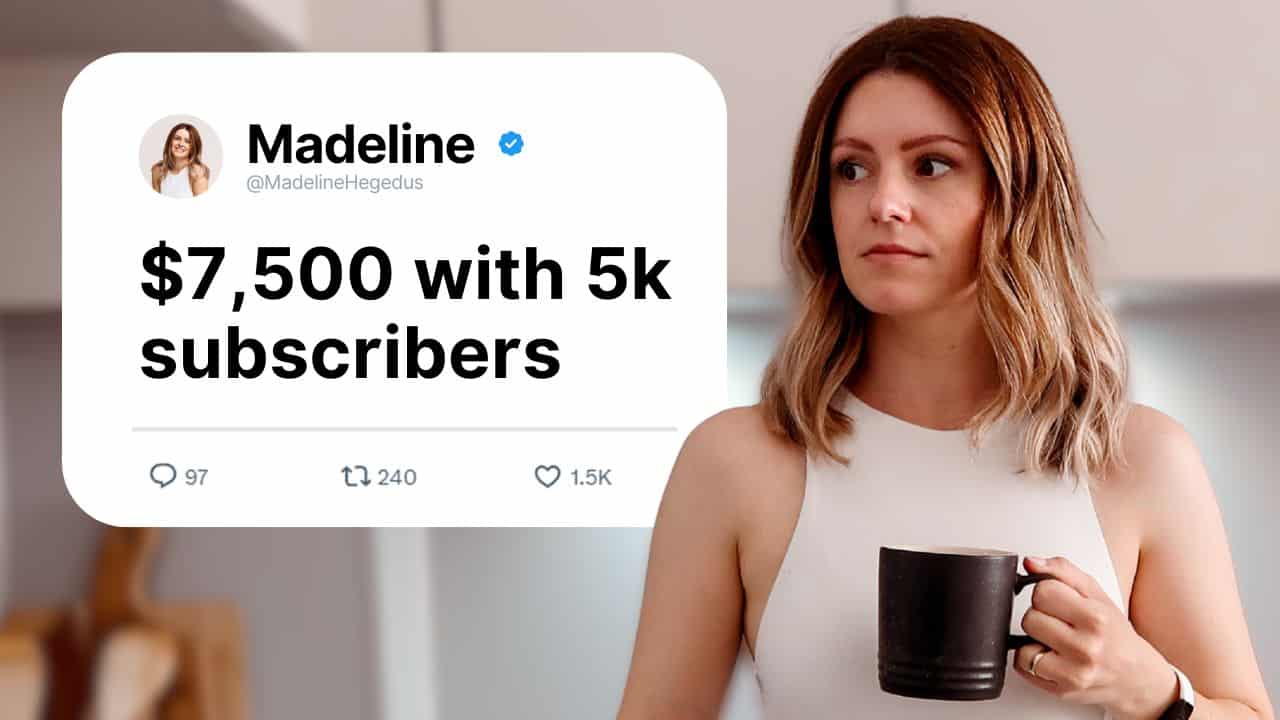
I made $7,000 from this YouTube video I posted on my channel with 5K subscribers.
Just as a comparison, my most viewed video on my main channel, with 60K subscribers, got half a million views but brought me $3,000 in AdSense.
So, what happened here?
I’m going to dive into the numbers, show you the behind-the-scenes and look together into what explains this massive difference. I’m also going to share with you the seven strategies that I use for my two YouTube channels to monetise them in slightly different ways.
At the end of this article, I’m also sharing the one thing I did to boost my income to $7,000. And it’s one thing that I think all YouTubers should do.
Keep reading below or watch the video:

The video that made me $7,000 is called “I posted daily on Instagram and this happened.” In it, I share how I grew my Instagram to 30K followers in a few weeks. It is actually a tutorial behind a product that I’m using, and it got 1,000 views.
Afterwards, I posted another video, which got a similar amount of views. It covered a similar topic, and I shared the same product in it.
Both videos have a few affiliate links in the description box. So, it’s not just this one product I mention in the videos. But the second video is me sharing basically how I’m using this service to achieve a very specific thing in my business and solve a problem like not having enough views or followers on Instagram or trying to grow online.
And this is one thing that I do think helped me. When we’re sharing any sort of affiliate links or products that we use, if it comes from a genuine place of, “I use this and it actually helped me,” it really helps. And I think that’s why this did so well for me.
I didn’t make much from AdSense from this second video because the channel is still quite small. But it continues to get views because it’s a topic that’s evergreen. It’s searchable, and it’s something that people, especially content creators who are trying to grow their platforms, are actually interested in seeing.
Back to the “I posted daily on Instagram and this happened” video, what I did with it is I repurposed it as an article on my website. I took the video’s transcript and turned it into proper, readable text. That means that the content of the article is the video itself. It’s the exact same content that I’m sharing in the video, but in written form. The article also includes the video, embedded in the text.
I do think blogging is a bit up and down these days. We can dive more into this in a future article if that is something of interest to you. But blogging has definitely changed now in the era of AI. It still works, and it still got me these results, as I do think the article helped the video. Blogging is just different from what it used to be 10 years ago when I started.
However, I really think that posting the video on my YouTube channel, combined with turning it into an article for my website, helped me reach the $7,000. A website can still bring in money by having ads displayed on it.
There are a few strategies that I use behind my content that I think really help me monetise, even on platforms that I might not have a huge following yet. And by the way, if you’re struggling with your YouTube channel and you can’t seem to break that annoying 100 views per video, then I have a free YouTuber growth checklist for you that you might find helpful. Let me know what you think of it if you get it.
Now, let’s dive into the seven strategies that I have behind this growth and making money.
Strategy #1: Know your audience
This might sound boring, but I think it’s at the core of everything we do as content creators. For me, for the channel we’re talking about here, my audience is content creators. I know it’s very meta, but I have learned so much from growing my main channel to 60K subscribers and my Instagram to 200k followers.
And it’s not just about the numbers. I do think an important part of it is the business that’s behind the channel. If you’re trying to make money from this, then you do have to have a bit more behind your content creation than just focusing on views or subscriber numbers.
I think growing your audience comes when you understand it. When you see what their problems are, where they are in their journey, what struggles they have, and where they want to be. This is really important when you’re a content creator. If you get them, then it’s much more likely that you’ll create content that resonates with them. And this is exactly what attracts that ideal audience.
Nowadays, it’s actually easier for me to know my audience because I get to chat with them more. I get messages from them, and I have more opportunities to learn about them, where they are at and where they want to be.
However, in the beginning, I used to do a lot of audience research on my own. I was using Facebook groups, Google search, Quora forums and Reddit. And if you’re just starting, I do recommend that you start with any place where you can find the main topic that you want to talk about. Scroll through those forums. Scroll through those threads and comments. See what people are saying, and see what they’re struggling with. That’s going to give you so much insight into where they are, where they want to be, and what kind of content you can create to help them get there.
Strategy #2: The video needs to show them the before and after
This doesn’t mean every video has to be a perfect before-and-after snapshot. That’s not what this is about. It’s more about showing the transformation they need or dream of—how you moved from that “before” point to the “after,” and the steps you took. That’s exactly what I’m sharing in my content: specific results and the kind of transformation my audience is looking for.
With the video we’re talking about, being able to show that I was actually using a service—and paying for it myself, still paying for it—mattered. It wasn’t sponsored or anything. This product helped me grow my audience on Instagram to 30K followers at the time. That feels very specific and tangible. Someone in that same position might think, okay, this could help me, too.
When we come from a place of authenticity and real results—and we’re ethical in what we share, not saying “get 100K followers in 20 days” or throwing around random numbers with no substance—we create content that actually resonates. I really do think that when my videos show a tangible before and after, that’s when they perform best.
Strategy #3: Build trust
I think being genuine with my audience is one thing that’s really helped me in my journey. I’ve always aimed to be truthful and honest about where I’m at, what my goals are, and how I’m getting there.
When you build that genuine connection with your audience, and they can trust you because they can see your real journey, that’s when your YouTube channel starts doing better, too.
And when it comes to sharing affiliate links or products, the more trust you’ve built—and the more you’ve shown that you’re actually using the products you talk about, not just sharing a random list—the more likely people are to click. When they can see real results behind a product, they’re much more likely to go through your affiliate link and sign up for whatever it is.
Strategy #4: Promote something you’ve built or used yourself
If you look under any of my YouTube videos, that’s exactly what I promote: products I’ve used or built myself. And that’s really important to me, because when I create a product, I can make sure it’s genuinely valuable. We want to be ethical content creators here—I know we’re not the kind of people who put out a sloppy product just to get it out there.
When I create a course, an ebook, or anything for my business, I’m always trying to overdeliver. My goal is that when someone buys one of my products, they think, “Wow, I’m getting all of this.” So I aim to maybe undercharge and overdeliver, because I want people to walk away with real value so they get actual results.
And when you build a product yourself, based on your own journey and the steps you followed to get there, you can be genuinely helpful and invite your audience to follow a similar path to get those results. If it’s not a product you’ve created, that’s obviously fine too—that’s where affiliate links come in. But I do think it’s important to promote products you’ve actually used yourself, or ones you would genuinely buy.
For me, the affiliate links that perform best—and what I tend to do—are the ones that promote products I’ve already bought or used. I don’t promote things I wouldn’t buy myself. I want to test a product and see how it works before sharing it with my audience. If someone buys something through my link and has a bad experience, that foundation of trust is broken. And that trust matters far more to me than getting a quick sale.
Strategy #5: Deliver on the promise of the title/thumbnail
There’s a fine line between clickbait and click-worthy. We do want our thumbnails to be clickable and enticing. To open a loop of curiosity and make people think, “Oh, what’s this video about? I need to click and find out.” That element matters.
So yes, we want thumbnails to be eye-catching, but when someone clicks, we also have to deliver. Whatever I put in the title and on the thumbnail has to be something the video actually follows through on. Otherwise, it’s just clickbait—and that’s not something that works on YouTube anymore.
Strategy #6: Have a clear call to action
This is something that’s really important, especially if you’re promoting a product. If you’re monetising with affiliate links—or however you choose to monetise your YouTube videos—it’s important to have a very clear call to action.
That call to action might come at the beginning of the video, or at the end. For me, it really helps when I script my YouTube videos and intentionally include the call to action. I always ask myself: what do I want people to do after watching this video?
Strategy #7: Create an email list today
I think this is the best tip I can give you. And I know it sounds boring to talk about an email list. But it’s one of the most effective things I’ve done for my business. I really do think it’s contributed a lot to the income I’ve been able to make—even with a smaller YouTube channel.
I use my email list to drive traffic to my YouTube, to my website, and sometimes to the products I mention. Creating an email list is so powerful because it can genuinely boost the income. If you look at any major website—H&M, or really any sales-based website—they won’t first ask you to follow them on Instagram. They’ll ask you to sign up for their email list, often offering a discount. And that’s because email has a much higher conversion rate than almost any other platform.
I personally use Flodesk for my email list and have been really happy with it for years. But honestly, whatever provider you use, just start today. Start small. Even if you’re not sure what you’ll send yet, or whether you want a full newsletter, begin collecting email addresses. I think you’ll thank yourself down the line.
Let me know where you’re at in your YouTube journey. And remember to grab the free YouTube growth checklist—it’s a great place to start.

Leave a Reply